The digitalisation of the economy and management practices is creating new requirements for the training of professionals capable of working in an integrated information environment, managing resources, optimising business processes, and making informed, data-driven managerial decisions. Under these conditions, the acquisition of modern digital skills by academic staff is becoming an important prerequisite for ensuring the competitiveness of educational programmes at the State Tax University.
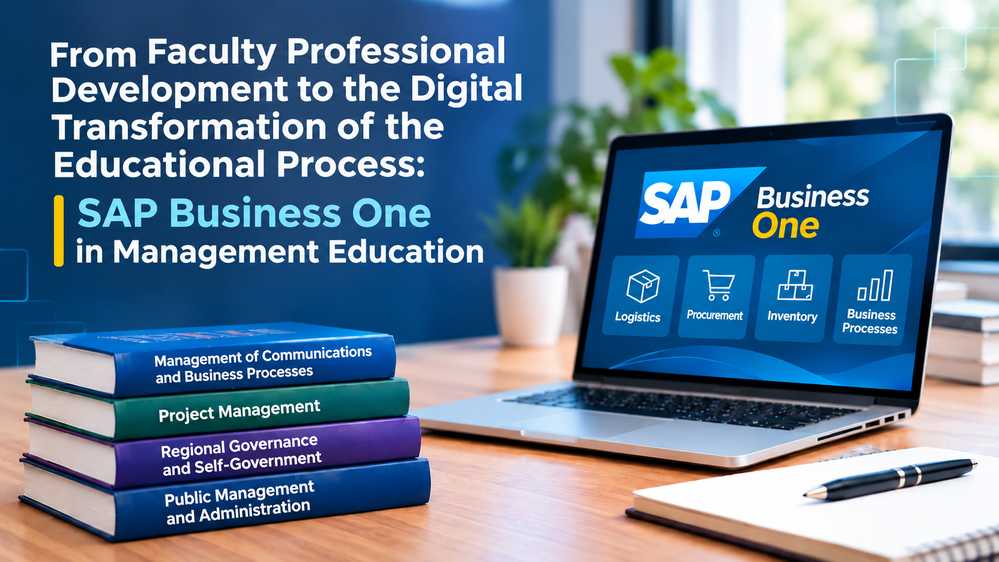
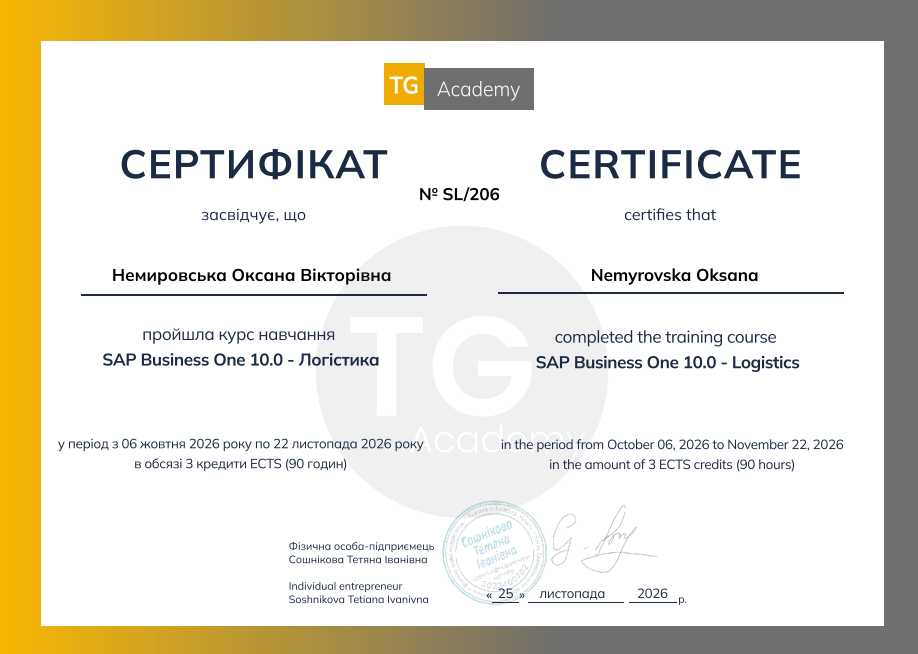
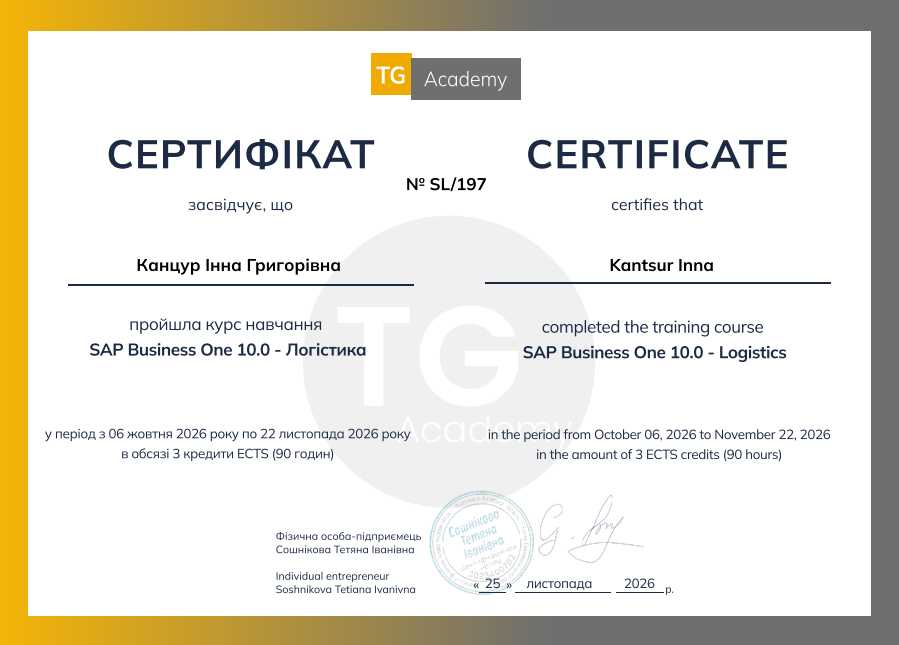
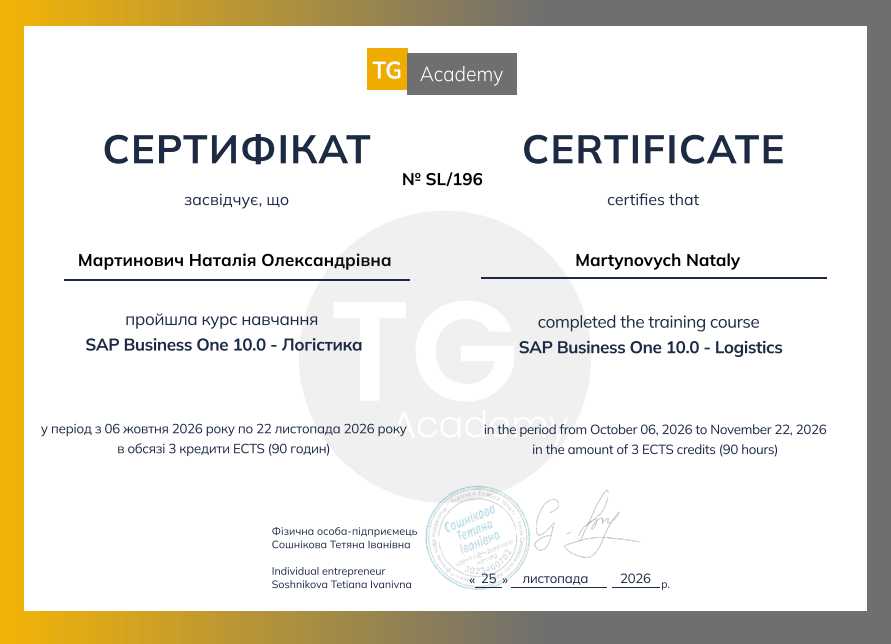
From 6 October to 22 November 2026, Nataliia Martynovych, Inna Kantsur, and Oksana Nemyrovska, academic staff members of the Department of Management and Public Administration, successfully completed the professional development course “SAP Business One 10.0 – Logistics”, comprising 90 hours (3 ECTS credits).
The course focused on an integrated enterprise resource planning (ERP) system that brings together key business processes within a unified information environment. Mastering such software enables academic staff to expand opportunities for students’ practical training, combine management concepts with digital tools for their implementation, and bring the educational process closer to the real-world operating conditions of modern organisations.
The particular value of the experience gained for the State Tax University lies in its interdisciplinary nature and the potential for its integration into the educational process at all three levels of higher education, in accordance with the competencies and programme learning outcomes defined by the Department’s educational programmes:
Educational Programme “Management of Communications and Business Processes” (Bachelor’s degree) — developing practical skills in the use of modern management tools, business process analysis and modelling, coordination of interactions between organisational units, and the application of digital technologies to improve organisational performance and support informed managerial decision-making;
Educational Programme “Project Management” (Master’s degree) — enhancing competencies in the use of modern information systems and management tools, the efficient utilisation and development of organisational resources, planning material, financial and information support for project activities, and assessing the effectiveness of technologies supporting the project life cycle;
Educational Programme “Regional Governance and Self-Government” (Master’s degree) — developing the ability to use modern digital technologies and specialised software to address complex public administration challenges, effectively manage resources, innovation and change, and adapt contemporary management models and technologies to the needs of local self-government bodies, municipal enterprises and institutions;
Educational and Scientific Programme “Public Management and Administration” (PhD) — expanding the range of research tools through the application of modern information technologies in scientific and professional activities, critical evaluation and adaptation of contemporary management models and practices, and the development of scientifically grounded recommendations for improving public management and administration.
The knowledge and practical experience gained provide a foundation for updating the content of educational components, developing practice-oriented assignments, simulating real-world management situations, and incorporating modern digital tools into students’ learning and research activities. For the University, this area of faculty professional development is of strategic importance, as it strengthens the digital dimension of educational programmes, ensures their relevance to current labour market needs, promotes interdisciplinary connections, and enhances graduates’ competitive advantages.
We express our gratitude to the TG Academy team for organising the professional training, and particularly to the course lecturers — Iryna Popova (V. N. Karazin Kharkiv National University) and Tetiana Kuchmiiova (Mykolaiv National Agrarian University) — for their professionalism, insightful presentation of the course material, and willingness to share their knowledge and practical experience.